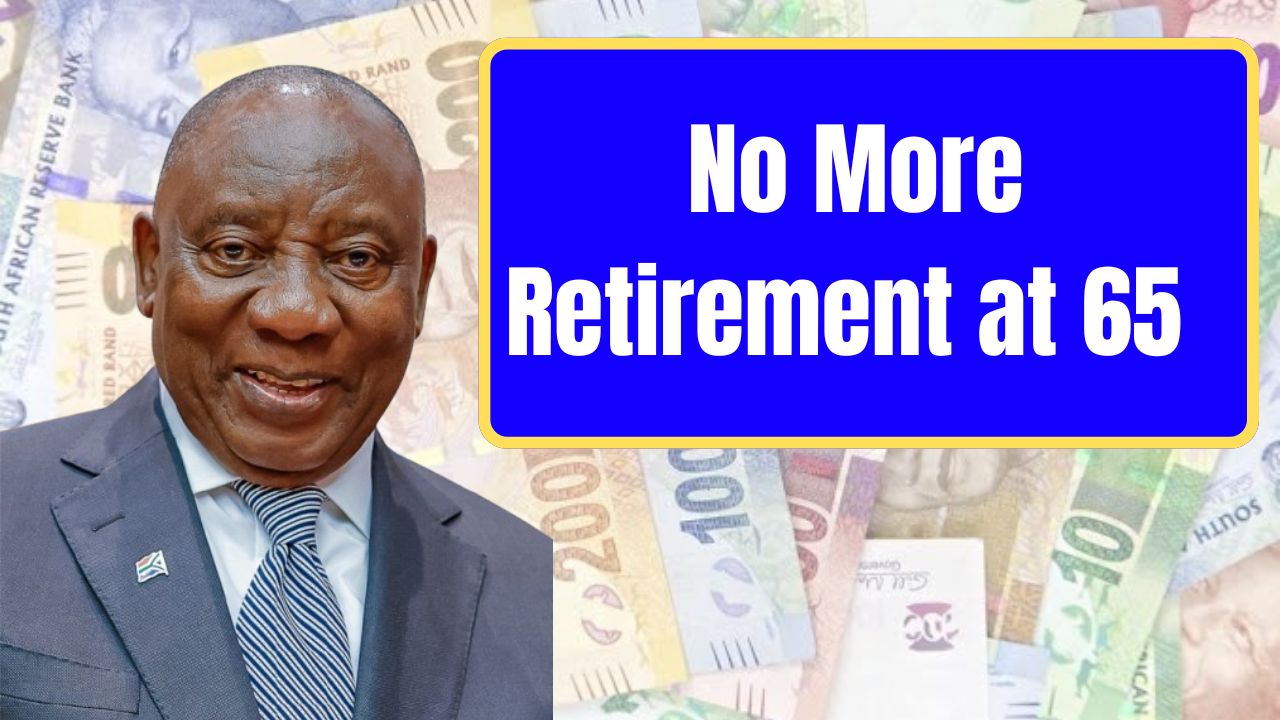
South Africa is preparing to undergo a significant shift in the way it defines and administers retirement. Until today, the retirement age had been mostly set at a standard level of 65 years throughout. However, changing economic conditions, rising life expectancies, and more pressure on pension systems forced the government to slowly rethink the significance of this traditional norm. The changes introduced aim towards modernized retirement planning for old-aged persons and economic longevity.
Introduction/Reason for the Changing Retirement Age
One of the key catalyst reasons behind a retirement age review is that South Africans have begun living longer and healthier lives. This rise in life expectancy results in growing savings on the pension fund. If the retirement ages are pushed up dramatically, the government can push pressure down the road on public funds while giving the citizens more timers to contribute to retirement savings.
The Republic of South Africa is already facing labor issues, one of which includes a lack of skilled workers. Presumably, employees may be suggested to retire off to an even further period as it may help with the transfer of knowledge, increase productivity, and stabilize the most important industries.
How Will These New Retirement Ages Be Enacted?
According to the proposal, the retirement age will likely be raised incrementally over 65, so public sector workers might be driven to retire nearer the very edge of the 67th year while in the private reciprocated sector, retirement may even be in the atmosphere of 70 years subject to contracts. However, also, others under self-employment and freelancing could similarly have the highest degree of flexibility, thus, depending on their willingness and capability-feature, they may indeed continue to work in their own field.
An option for retirement at 60 years may still be in existence, but benefits may be adjusted depending on one’s contribution and entitlement conditions.
Effects on Existing and Future Retirees
Individuals who are presently availing of pensions or social welfare do not have to fear a disruption in their current benefits, as stated by the authorities. A feature of the expected changes is the newly insured to gradually adapt to the unfortunate outcome of an unpleasant bear market.
The new structure may, if applied to workers already approaching retirement, compel modifications in savings strategies, health planning, and career aspirations. The appealing side of working longer is that such prolongation could actually enhance personal income, alleviate financial stress, and otherwise ensure a more pleasant transition.
Benefits of Working Longer
Extending working years can confer the following benefits. Older employees often bring experience, leadership, and mentorship skills into the workplace. Staying active professionally also supports mental health, socialization, and physical health.
A larger population at work indeed takes advantage of contributions to the government in terms of duty and pension, thereby bottling the state’s economy and providing life support to future generations.
Transiting Towards Flexible and Phased Retirement
The very concept of retirement is changing in South Africa; the majority of the population is beginning to plan for gradual retirement, part-time work, consulting, or hobby companies rather than the usual abrupt departure. Employers are also keen to come out with some ways in which they can make provisions for older employees to work part-time at lower salaries so as to keep company productivity consistent.
This form of help goes on to many in balancing income, health, and lifestyle alongside engagement in meaningful work.
Also Read: SASSA Major Grants Increased To R4,500 in 2025: Eligibility, Payment Dates & Updates